
NYC Rat Exterminators: Fast & Effective Service in Manhattan, Brooklyn, Queens
Rats thrive in New York City due to dense urban living, aging infrastructure, frequent construction, and abundant food waste, enabling them to travel easily through sewers, subways, and shared walls across Manhattan, Brooklyn, and Queens. NYC is home to both Norway rats, which can grow up to 16 inches long and produce 4-6 litters annually, and Roof rats, which are smaller with longer tails and prefer nesting above ground. These rodents cause significant damage by contaminating food, destroying structures, and transmitting diseases like food poisoning and rat bite fever. Signs of a rat problem include droppings, gnaw marks, grease marks, and nocturnal scratching noises.
Full Force Rat Exterminators provides quality rodent pest control to residential and commercial businesses throughout Manhattan, Brooklyn, and Queens.
Rats
What kind of damage do rats cause?
Rats cause significant damage everywhere they go, contaminating food, destroying structures, and spreading diseases like food poisoning and rat bite fever. They are highly adaptable nuisances that can enter places by climbing, jumping, gnawing, and even swimming through sewers, often appearing through toilets and broken drains.
Rats will enter a place any way they can – climbing, jumping, gnawing and swimming through sewers. They’ll climb up through toilets and broken drains. They’re deadly nuisances that adapt to most climates and conditions.
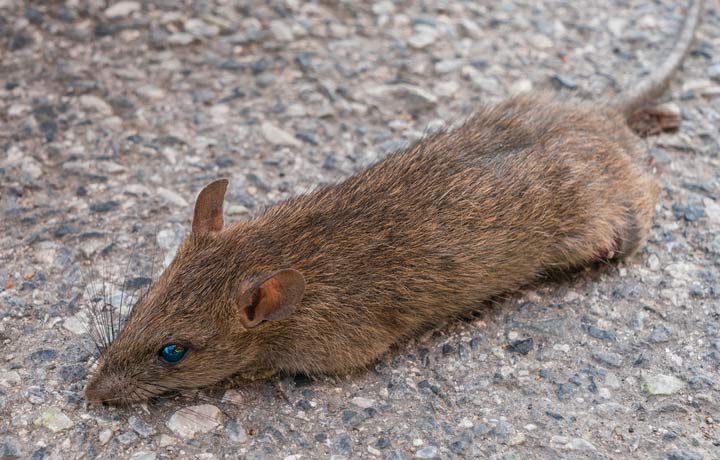
The Norway Rat (aka Brown Rat, Sewer Rat)
Rattus Norvegicus
- Shaggy brown or gray fur with scales on the tail and ears
- Tail is shorter than the head and body
- Can grow up to 16 inches long with an 8-inch tail
- Makes burrows along rubbish and woodpiles, building foundations, damp fields, and gardens
- Nocturnal and hides during the day — seeing them in daylight is a sign of a large infestation
- Excellent swimmers and often nests close to water sources
- Builds nests out of fibrous materials like shredded paper and cloth
- Invades basements, crawlspaces, sewers, ground floors, and sometimes attics
- Can damage foundations, gnaw on metals (copper, lead), wood, and plastic
- Diet includes meats, fish, nuts, fruits, and cereal grains
- Rarely travels more than 300 ft. from its nest
- Females can produce 4 to 6 litters per year with 20 or more offspring
Roof Rats (aka Black rats)
R. Rattus
- Smaller than Norway rats but with longer tails than their head and body
- Sleek and smooth dark brown to black fur
- Pointy noses with larger heads and ears
- Very agile and fast climbers
- Rarely make burrows — they nest above ground in trees, shrubs, and dense vegetation
- Diet includes nuts, fruits, berries, snails, slugs, citrus, and avocado
- Hoards nuts and seeds
- Females have 3 to 5 litters per year with 5 to 8 offspring each
- Often seen scampering across utility lines and fences at night
- In buildings, they live in walls, attics, false ceilings, and cabinets
- Prefer warmer ocean climates
- Enter structures through sewers, gaps, openings, climbing, jumping, and gnawing
Signs of a Rat Problem in NYC
- Droppings (rice-shaped) along walls, in cabinets, or near food sources
- Gnaw marks on wood, plastic, wires, or pipes
- Grease marks or rub marks along baseboards and walls
- Nesting material (shredded paper, fabric, insulation) in attics or basements
- Strange scratching or scurrying noises at night
- Sightings during the day (often a sign of a large infestation)
Why Rats Thrive in Manhattan, Brooklyn & Queens
Dense urban living, aging infrastructure, frequent construction, restaurants, and easy access to food waste make New York City an ideal environment for rats. They travel easily through sewers, subways, shared walls, and garbage areas, quickly moving between buildings in all three boroughs.
How Full Force Rat Exterminators Help
Full Force’s Rat control methods include inspection, baiting, trapping, and spraying. Equally important are the preventive measures our technicians take to reduce the places that rodents can hide within your home or commercial building.
We focus on both elimination and long-term prevention by sealing entry points and removing attractants.
